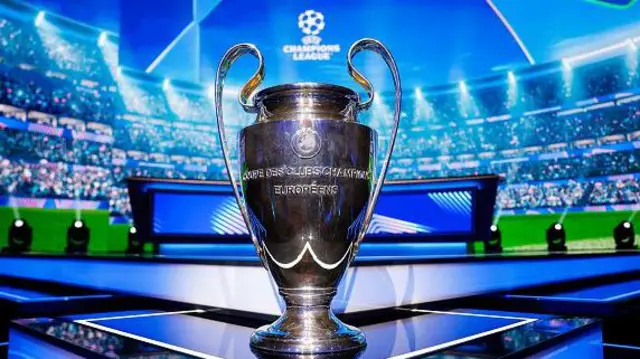
UEFA Champions League 2025: History, Format & Legacy
The UEFA Champions League stands as the crown jewel of European football. Every season, the best clubs across the continent come together to battle for glory, pride, and immortality. It is more than a competition—it is a celebration of skill, passion, and history. From dramatic goals to legendary comebacks, the Champions League remains the stage where heroes are made and legacies are defined.
What Is the UEFA Champions League?
The UEFA Champions League is the premier club football competition in Europe, organized by the Union of European Football Associations (UEFA). It features the top teams from various domestic leagues who earn their spot through excellence in their home competitions. For clubs, it represents the pinnacle of achievement—a chance to prove themselves among the elite. For players, it’s the ultimate platform to showcase their talent to the world.
The History Behind the Tournament
The story of the Champions League begins in 1955, when the European Cup was introduced to determine the best football club on the continent. The concept was inspired by the desire to create a unifying competition across Europe. The first edition was won by Real Madrid, a club that would go on to dominate the early years of the tournament.
In 1992, the competition was rebranded as the UEFA Champions League, introducing a new era with group stages, more teams, and a global television audience. This transformation made it more inclusive and commercially successful, turning it into a global sporting phenomenon. Over time, iconic clubs like AC Milan, Liverpool, Barcelona, Bayern Munich, and Manchester United joined Real Madrid in etching their names into football history.
Read Also: Pi Network Price Today: Value, Trends & Future Insights
Why the Champions League Matters
The Champions League holds unmatched prestige in world football. Winning it means conquering Europe and earning respect worldwide. It tests clubs against the strongest opponents from different countries, pushing tactics, resilience, and teamwork to the limit.
For players, the tournament offers the chance to become legends. Names like Cristiano Ronaldo, Lionel Messi, Zinedine Zidane, and Paolo Maldini became immortal through their performances on these nights. For fans, the Champions League delivers the highest level of football entertainment—full of unpredictability, raw emotion, and unforgettable drama.
The Format and Structure
The structure of the Champions League is carefully designed to balance competitiveness and excitement. Clubs qualify based on their domestic league performances. Before the main event begins, qualifying rounds allow smaller clubs to earn their way into the spotlight.
The main phase traditionally starts with a group stage, followed by knockout rounds. The group stage ensures every club gets several matches, while the knockout rounds bring back the tension of winner-takes-all football. The final, usually held in May, is the grand climax—a single match that captures the attention of millions across the globe.
From 2025, the format will expand, introducing a league phase with more matches and variety in opponents. This change aims to increase competitiveness and global appeal while giving fans more marquee fixtures each season.
Legendary Moments and Iconic Matches
The Champions League has produced some of the greatest football moments ever seen. Fans remember Liverpool’s miraculous comeback in Istanbul in 2005, when they overturned a 3–0 deficit against AC Milan to lift the trophy. Manchester United’s dramatic injury-time turnaround against Bayern Munich in 1999 is another moment etched in football folklore.
Barcelona’s tiki-taka dominance under Pep Guardiola and Real Madrid’s historic three-peat from 2016 to 2018 showcased contrasting yet equally breathtaking footballing philosophies. Each season brings a new set of memories—wonder goals, penalty shootouts, and stories that inspire future generations.
Records and Statistics
Real Madrid holds the record for the most Champions League titles, with a remarkable fifteen triumphs. Their dominance reflects consistency, experience, and a unique connection with the competition. Behind them, clubs like AC Milan, Bayern Munich, Liverpool, and Barcelona have also claimed multiple titles.
On an individual level, Cristiano Ronaldo leads the scoring charts, followed closely by Lionel Messi. These two modern icons have redefined excellence in the Champions League era. Their performances have elevated the competition’s standard and captivated billions of fans.
The Global Impact of the Competition
The Champions League isn’t just a European event—it’s a global phenomenon. Broadcast in hundreds of countries, it attracts fans from every corner of the planet. Stadiums fill with color, chants, and emotion, while millions more tune in from home.
For clubs, participating in the Champions League boosts global recognition, financial power, and fan engagement. For cities, hosting matches brings tourism, cultural exchange, and prestige. The anthem, the atmosphere, the sense of occasion—all contribute to an experience unlike any other in sport.
Influence on Players and Clubs
A club’s identity can change entirely through Champions League success. Winning it can elevate a team from domestic champion to global powerhouse. It strengthens financial stability through prize money, sponsorships, and brand exposure.
For players, it is the stage that defines greatness. Scoring in a Champions League final, lifting the trophy, or even producing a match-winning performance under the brightest lights—these are moments that stay with them forever. Young talents dream of hearing that anthem and proving themselves on Europe’s biggest nights.
Evolution and Future of the Champions League
Football is constantly evolving, and so is the Champions League. The competition has embraced technology, with the introduction of goal-line technology, VAR, and digital fan engagement. The expanded format from 2025 reflects UEFA’s ambition to reach broader audiences and enhance competitiveness.
However, challenges remain. Balancing fixture congestion, ensuring fairness for smaller clubs, and preserving the spirit of competition are vital for its continued success. The tournament’s evolution must respect its roots while embracing innovation. Fans want excitement and fairness—not just commercial expansion.
The Magic of Champions League Nights
Ask any football fan what makes the Champions League special, and the answer often lies in emotion. The lights, the anthem, the atmosphere—it feels different. There’s something magical about a midweek night when the world’s best players step onto the pitch, knowing millions are watching.
The energy in the stadiums is unmatched. Goals are celebrated with passion, every save feels crucial, and every whistle carries weight. These nights remind fans why they love the sport—because anything can happen.
Challenges and Criticisms
While the Champions League enjoys immense popularity, it faces ongoing debates. Critics argue that financial disparity between clubs creates imbalance, giving richer teams an advantage. The constant expansion risks fixture overload and player fatigue.
There’s also a growing discussion around how to include smaller clubs without compromising competition quality. Balancing commercial interests and football integrity is a challenge UEFA continues to navigate. Despite these issues, the Champions League remains the most competitive and respected club tournament on Earth.
Why It Captures the World’s Imagination
The beauty of the Champions League lies in its unpredictability. Every season, underdogs challenge giants, new stars emerge, and old legends return for one more shot at glory. It connects generations—fans who watched the first European Cups share the same passion as teenagers cheering for modern superstars.
The competition represents dreams and emotions that transcend language, culture, and geography. Whether you support a club or simply love football, the Champions League unites people through shared moments of brilliance.
Conclusion
The UEFA Champions League is more than a football competition—it’s a global story of ambition, triumph, and unity. It has shaped modern football and continues to inspire millions of fans every year.
From its humble beginnings to the modern spectacle it has become, the Champions League remains the ultimate test for clubs and players. It rewards excellence, celebrates teamwork, and captures the essence of what makes football the world’s most beloved sport.
As each season unfolds, new legends are born, and history is written once again under those famous floodlights. The UEFA Champions League will always stand as the highest stage in club football—a tournament where dreams meet destiny.
FAQs
What is the UEFA Champions League?
The UEFA Champions League is Europe’s top club football tournament, featuring elite teams competing for continental glory.
When did the UEFA Champions League start?
It began in 1955 as the European Cup and was rebranded as the UEFA Champions League in 1992.
Which club has won the most Champions League titles?
Real Madrid holds the record with fifteen Champions League titles, showcasing dominance and consistency.
How do teams qualify for the Champions League?
Clubs qualify based on their domestic league performance, with top teams earning automatic or playoff spots.
When is the UEFA Champions League final held?
The Champions League final usually takes place in May, marking the climax of Europe’s football season.



Post Comment