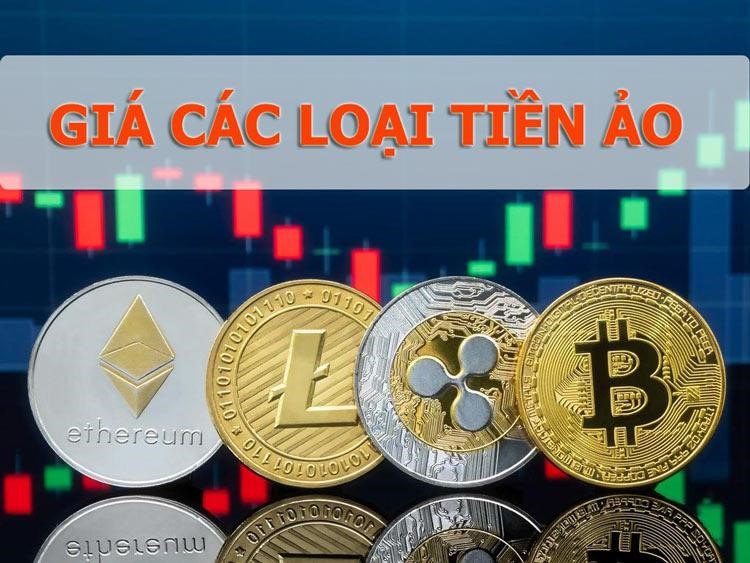
Giá Tiền Ảo Live Cryptocurrency Prices & Market Trends
The phrase “giá tiền ảo” translates from Vietnamese as “virtual currency price” or “cryptocurrency price.” It reflects one of the most searched and discussed topics in today’s financial world. Cryptocurrency prices fluctuate every second, driven by supply, demand, market sentiment, and global macroeconomic trends. For many investors, understanding these movements is not just about numbers on a screen—it’s about interpreting the digital heartbeat of a new financial era.
In this article, we’ll explore what determines cryptocurrency prices, how they move, what affects value across different coins, and how investors interpret these signals.
What Is Cryptocurrency Price?
Definition and Meaning
Cryptocurrency price refers to the market value of a digital asset like Bitcoin, Ethereum, or Solana at any given moment. Prices are determined on exchanges where buyers and sellers meet, just as in traditional stock or commodity markets.
The concept of “giá tiền ảo” highlights how digital assets have evolved into a global marketplace, operating 24/7 without borders. Unlike fiat currencies that depend on central banks, cryptocurrency prices are purely market-driven.
How Prices Are Calculated
The price of a cryptocurrency comes from the last transaction executed on an exchange. For example, if the most recent trade for Bitcoin occurred at $65,000, that becomes the current market price. Aggregator platforms average prices across exchanges to produce a global rate.
This decentralized nature ensures that no single entity controls the market. Instead, millions of participants collectively define value through buying and selling activity.
Read Also: Bitcoin Halving Countdown: Next Bitcoin Halving 2028
Key Factors Influencing Cryptocurrency Prices
Supply and Demand
As with any market, supply and demand remain the foundation of price movement. Bitcoin’s fixed supply of 21 million coins means scarcity plays a central role. When demand rises but supply stays limited, prices increase. The same logic applies to other coins with capped issuance.
Market Sentiment
Cryptocurrency markets thrive on emotion. Fear and excitement drive massive swings in value. Positive news—such as a government approving a crypto ETF or a major company adopting blockchain—can spark rallies. Conversely, regulatory concerns or exchange failures can trigger selloffs.
Social media also amplifies sentiment. Tweets, posts, and influencer commentary often cause rapid, short-term volatility.
Technological Development
A coin’s underlying technology affects investor confidence. When developers release upgrades that improve scalability, security, or utility, value perception strengthens. For example, Ethereum’s network upgrades have historically influenced its price trajectory.
Regulation and Government Policy
Government actions shape the environment for cryptocurrencies. Clear, supportive regulation encourages institutional participation, which often boosts prices. Restrictive measures or taxation can produce the opposite effect.
Global Economic Trends
Macroeconomic factors like inflation, interest rates, and currency instability influence crypto markets. Many investors view digital assets as hedges against fiat currency depreciation. During periods of economic uncertainty, capital often flows into Bitcoin and other established cryptocurrencies.
Understanding Price Volatility
Why Prices Fluctuate So Rapidly
Unlike traditional assets, cryptocurrency markets never close. They operate around the clock, across time zones, and across continents. This continuous trading creates constant price discovery but also fuels volatility.
Because digital assets are still emerging, market depth is thinner than in traditional finance. Smaller trades can move prices significantly, especially for low-cap coins. As adoption increases and liquidity deepens, volatility may gradually decline—but it remains part of the market’s character.
Volatility as Opportunity
Experienced traders view volatility not as risk but as opportunity. Price swings enable short-term trading strategies like scalping or swing trading. Long-term investors, meanwhile, interpret corrections as chances to accumulate more at discounted levels.
The key lies in understanding that volatility is inherent, not accidental. Accepting it allows for rational decision-making rather than emotional reaction.
How to Interpret Cryptocurrency Prices
Short-Term Movements
Short-term price action often reflects immediate market emotion. Sudden spikes may come from breaking news, large investor buys, or algorithmic trading. While they draw attention, these moves rarely define long-term trends.
Long-Term Trends
Long-term value derives from adoption, innovation, and economic relevance. Coins with solid utility, community support, and transparent leadership tend to sustain value. Analyzing on-chain data—such as transaction volume and wallet activity—helps investors see whether a project is gaining genuine traction.
Correlation With Bitcoin
Bitcoin remains the benchmark for the entire crypto market. When Bitcoin rises, altcoins usually follow. When it falls, others decline too. Understanding this correlation helps investors anticipate broader market movement rather than reacting to isolated signals.
Major Cryptocurrencies and Their Price Behavior
Bitcoin
Bitcoin, the first and most recognized cryptocurrency, remains the market leader. Its price acts as a barometer for the entire industry. Halving events, adoption by institutions, and macroeconomic shifts tend to shape its direction.
Ethereum
Ethereum’s price reflects its role as a platform for decentralized applications. Network upgrades, scalability improvements, and growth in decentralized finance often push demand higher.
Stablecoins
Unlike other cryptocurrencies, stablecoins maintain fixed values tied to fiat currencies. Their stability makes them essential for trading and liquidity management but less appealing for speculation.
Emerging Altcoins
New coins launch frequently, often with specific purposes—gaming, decentralized storage, or artificial intelligence integration. While some offer innovation, others lack long-term viability. Price behavior in this segment can be extreme, offering both massive gains and steep losses.
The Role of Exchanges in Setting Giá Tiền Ảo
Cryptocurrency exchanges function as digital marketplaces where traders buy and sell coins. Each platform sets prices based on internal supply and demand. Global averages arise from data aggregation across these exchanges.
Liquidity plays a critical role. Exchanges with larger user bases and deeper liquidity generally offer tighter spreads and more stable prices. Smaller exchanges may display variations, particularly for less popular tokens.
External Influences on the Market
Media Coverage
Media narratives can create momentum. Positive reports on innovation or adoption often attract new investors, increasing demand. Negative headlines, such as hacks or regulatory crackdowns, cause rapid declines.
Institutional Participation
Institutional entry brings credibility and capital. When large financial firms or payment networks adopt or endorse cryptocurrencies, it signals maturity and stability. Institutional interest often leads to broader adoption and price support.
Global Events
Geopolitical tension, inflation concerns, or central bank policy changes all influence cryptocurrency pricing. Digital assets increasingly act as alternative stores of value in times of uncertainty.
How Investors Analyze Giá Tiền Ảo
Investors use technical analysis, fundamental analysis, and sentiment tracking to evaluate prices. Technical analysts study chart patterns, resistance levels, and volume trends to forecast short-term moves. Fundamental analysts focus on project utility, technology, and developer activity.
Combining both methods often yields balanced insight. Understanding the reasons behind price action allows investors to differentiate between hype and true innovation.
The Future of Cryptocurrency Prices
As adoption grows, cryptocurrency markets are gradually integrating with mainstream finance. Global regulation is becoming clearer, institutions are expanding exposure, and blockchain innovation continues to accelerate.
Over time, the price discovery process may become more stable as liquidity deepens and speculative extremes fade. Yet, cryptocurrencies will likely retain some volatility, keeping them dynamic and attractive to traders.
The future of giá tiền ảo rests on adoption, innovation, and the evolving balance between decentralization and regulation. Each development—whether technological or economic—reshapes the way the world perceives digital value.
Conclusion
Understanding giá tiền ảo means grasping the forces that shape digital asset markets—supply, demand, sentiment, technology, and macroeconomics. Prices rise and fall, but each fluctuation reveals something about human behavior, innovation, and global finance.
Whether viewed as investment, technology, or monetary revolution, cryptocurrency pricing remains a window into the future of money. The journey continues to unfold, and every price movement tells part of that story.
FAQs
What does “giá tiền ảo” mean?
“Giá tiền ảo” means cryptocurrency prices in Vietnamese, referring to the value of digital currencies like Bitcoin and Ethereum.
Why do cryptocurrency prices change so often?
Crypto prices shift due to supply, demand, investor sentiment, and global economic events that influence market trends.
Which factors affect giá tiền ảo the most?
Main factors include regulation, technology updates, adoption rates, market liquidity, and macroeconomic conditions.
How can I track live cryptocurrency prices?
You can track live prices using trusted crypto exchanges, financial news platforms, and data aggregator websites.
Will cryptocurrency prices rise in the future?
Future prices depend on adoption, innovation, and regulation. Historically, growth follows strong demand and network expansion.



Post Comment